

While Jordan is replete with human capital, the country’s economy fails to provide for its largely young and educated population. Jordanians are some of the most educated regionally and have the most engineers per capita of any country in the world, at 1 in 40. However, unemployment is rife, particularly for those under the age of 35, a shocking phenomenon considering recent GDP growth. In a country where the median age hovers around 24, vast structural and cultural reforms are needed to ensure this country’s youth have a future.
Talent Struggling for Work
Jordan’s labor market is under strain, with a national unemployment rate of 21% in 2024, according to the Department of Statistics. Women and youth face the greatest challenges, despite their untapped potential. The true scale is worse, as discouraged and underemployed workers are left out of official figures. At its core, the labor market matches people’s skills, energy, and time with the most productive roles in the economy. When it functions well, it allocates talent efficiently. When it breaks down, as in Jordan’s case, valuable human potential goes to waste.
Moreover, Jordan’s labor force participation is alarmingly low. Labor force participation refers to the share of the working-age population that is either employed or actively seeking work, while those who are not looking for work are excluded. In 2024, only 34% of Jordanians of working age fell into this category. The gender gap is stark, with participation at 53% for men compared to just 15% for women. This leaves a vast portion of the population economically inactive due to social, cultural, or structural barriers.
Among those who do participate in the labor market, jobs remain scarce. Women face a 33% unemployment rate, meaning they are actively seeking work but cannot find it, nearly double that of men at 18%. Age also plays a major role. Unemployment is highest among Jordanians aged 25 to 39 at nearly 50%, followed by 37% for those aged 15 to 24. By contrast, it drops to just 14% for those aged 40 and older. Jordan’s unemployment problem is therefore not only about new entrants, but about an economy failing to utilize its most capable and active workers.
While education is highly valued in Jordanian society, a university degree no longer guarantees employment. In 2024, Jordanians with a bachelor’s or higher degree faced a 22% unemployment rate, higher than those with secondary (19%) or even less than secondary education (20%). The frustration is most intense among graduates, who invested years and money into education, only to find limited opportunities waiting. About 61% of unemployed Jordanians in 2024 had prior work experience, while 39% had never worked, highlighting that returning to the workforce after unemployment is a major challenge due to skill loss and diminished confidence.
When Education Misses the Mark
The education system continues to produce graduates without sufficient alignment to market demand. According to the Ministry of Higher Education, in the 2022-2023 academic year, there were approximately 134,000 new university acceptances, 400,000 students enrolled, and 74,000 graduates entering a job market that cannot absorb them. Almost 90% held bachelor’s degrees or higher, while only 13% earned diplomas or pursued vocational training, despite stronger demand for practical and technical skills in the economy. This oversupply of academically trained graduates in saturated fields like medicine and engineering exacerbates unemployment, especially when employers are seeking hands-on experience or market-specific skills. Meanwhile, foreign labor continues to fill roles that could be performed by Jordanians, if not for weak vocational systems. To correct this, public universities with greater resources should focus on traditional academic degrees, while smaller private universities pivot toward technical and vocational training. Simply expanding university access without reshaping outcomes will continue to flood the market and deepen the mismatch.
Additionally, many structural issues amplify the problem. Public spending has not translated into productive employment or youth empowerment. In 2024, Jordan allocated JD 2.1 billion, or 18% of its total spending, to social support, while only 12% was spent on education, a stark imbalance that favors consumption over capacity building. Redirecting a portion of social support toward vocational education and skill-building would help individuals become economically self-reliant, rather than dependent on state subsidies.
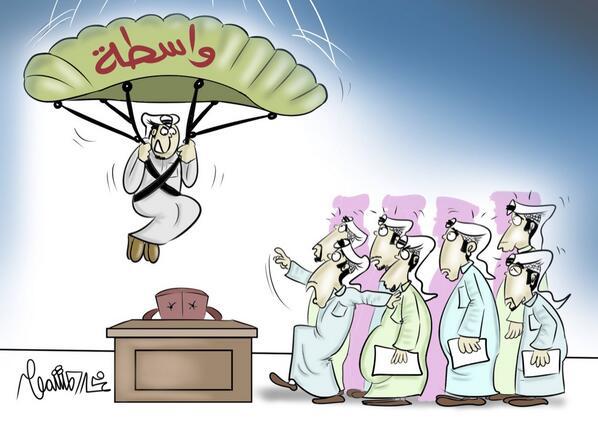
Furthermore, favoritism in hiring remains a major barrier to fair labor market access. A Yarmouk University study published by the Integrity and Anti-Corruption Commission characterizes wasta (nepotism) as a multidimensional social practice rooted in kinship and social affiliation, which has adapted from traditional contexts into modern public and private employment systems. While wasta can theoretically create opportunities for deserving individuals who lack formal access, in practice, it often privileges the underqualified and sidelines more capable candidates. This undermines productivity, deepens public frustration, and fuels a brain drain as skilled Jordanians look abroad for recognition and opportunity. It also distorts competition, deterring private investment and innovation, two engines of job creation Jordan desperately needs.
Solutions to Unemployment
Jordan should expand mandatory national service for young men, with both short-term and long-term options. Done properly, this can instill discipline, offer technical training, and provide employment pathways, whether in the military or civil sectors. Jordan already has a nominal conscription law, but it suffers from deferrals and inefficiencies. Recently, the government has taken a positive step by reintroducing national service on a limited scale, showing its potential to address youth unemployment and skills gaps. However, to truly tackle the country’s persistent joblessness and prepare young people for the demands of a modern economy, these efforts must be expanded and better structured in the future. Switzerland is a good model to follow. It has three structured options, including civil service for social and environmental work. Adopting a Swiss-style model could give Jordanian youth a choice between military training, technical defense roles, or structured community service, all of which contribute to employability and national resilience.
With respect to educational pathways, the Tawjihi (secondary school examination) system remains overly rigid, memorization-heavy, and the sole gateway to academic and career opportunities. It must be reformed to assess critical thinking, practical skills, and vocational aptitude, not just rote learning. Simultaneously, university enrollment must be restricted in saturated fields. Instead of cramming students into humanities and theoretical programs, public funding should incentivize institutions to focus on employability. One way is to tie university funding to graduates’ employment outcomes, rewarding institutions that align with market needs.
As previously mentioned, favoritism remains a powerful gatekeeper in both public and private employment. While social networks can help deserving individuals, they more often block opportunities for qualified candidates and disincentivise effort. Jordan must implement transparent hiring frameworks, especially in government, with digital application systems, standardized interviews, and anonymous candidate evaluations. Whistleblower protections and penalties for abuse of influence are also needed to restore fairness and trust. These interventions are not short-term fixes. But taken together, they can reset expectations, expand access to real opportunity, and help Jordan unlock the full potential of its citizens.